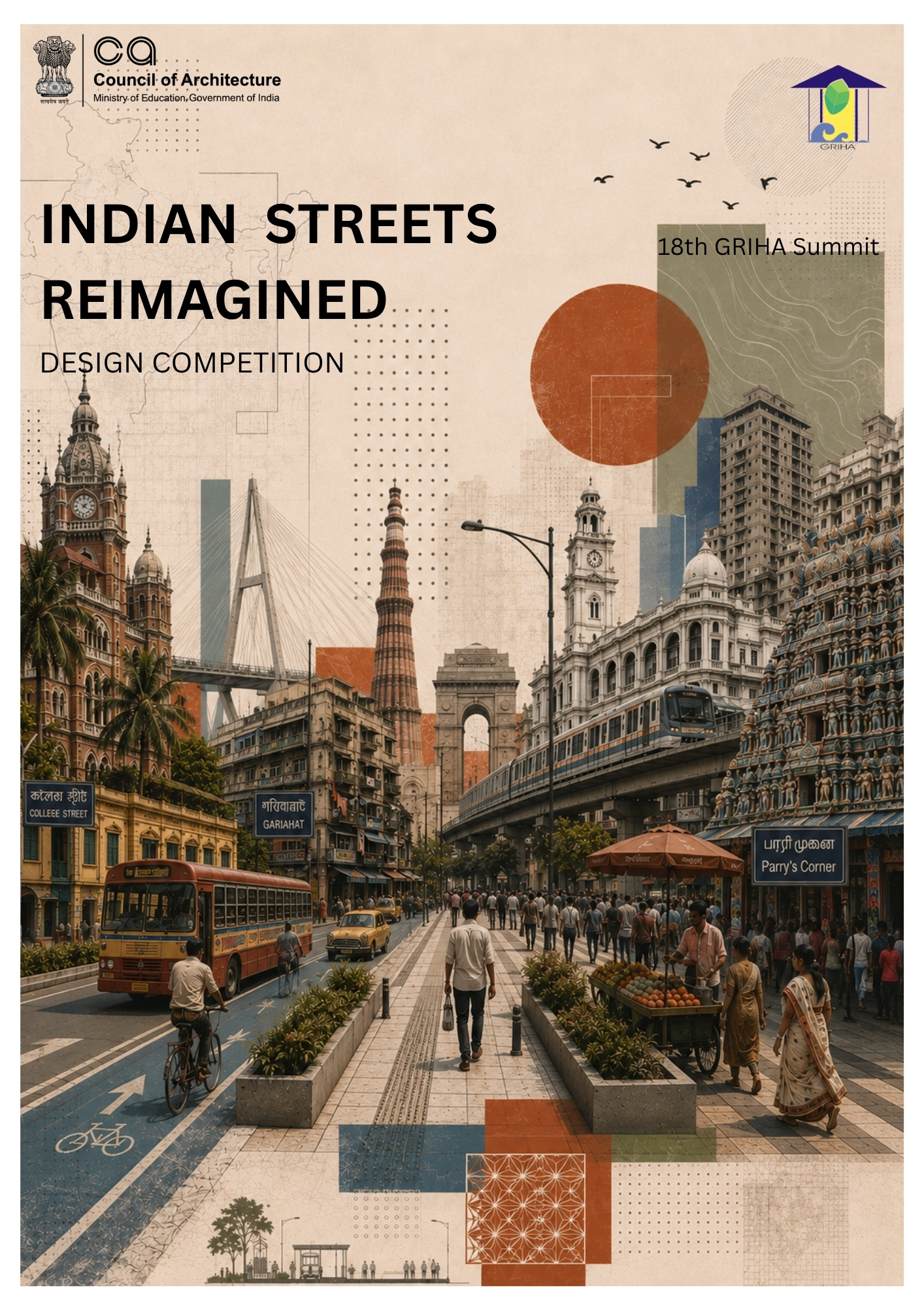
India’s Streets Reimagined - Design Competition
Urban streets have evolved alongside cities, shaped by changing patterns of movement, growing populations, new technologies, and shifting ways of living. Yet through all these transformations, one idea has remained constant: streets are among the most shared spaces of urban life.
From historic bazaars and neighbourhood lanes to contemporary avenues and transit corridors, the street has always been more than a route between destinations. It carries movement. It supports livelihoods. It creates opportunities for exchange, interaction, and everyday public life.
Over time, however, many streets have come to prioritise vehicles over people leaving limited space for walking, cycling, public transport, informal activity, and nature. The growing extent of hardscape, coupled with inadequate shade and vegetation, has intensified urban heat island effect and created uncomfortable outdoor conditions. As streets become increasingly inhospitable, people spend less time outdoors, diminishing opportunities for everyday interaction, recreation, and public life. In rapidly urbanising regions such as Delhi NCR, this imbalance has contributed to congestion, heat stress, air pollution, waterlogging, unsafe movement, and declining public space. Some streets support commerce and constant activity; others offer shade, pause, and connection. Some move people efficiently; others bring communities together. The most successful streets do not serve a single purpose they balance mobility, ecology, safety, access, and public life.